Add reflect, symmetric and edge padding #460
Conversation


 fmassa
left a comment
fmassa
left a comment
fmassa
left a comment
There was a problem hiding this comment.
This is awesome, thanks a lot!
Apart from some doc changes, I think it would be great if you could add some very simple tests for it.
Something simple, for example with a dummy image like
a = torch.zeros(10, 10, 3)
a[:, :5] = 255
and check that the padded versions behave as expected. What do you think?
| this is the padding for the left, top, right and bottom borders | ||
| respectively. | ||
| fill: Pixel fill value. Default is 0. If a tuple of | ||
| length 3, it is used to fill R, G, B channels respectively. |
This comment was marked as off-topic.
This comment was marked as off-topic.
Sorry, something went wrong.
This comment was marked as off-topic.
This comment was marked as off-topic.
Sorry, something went wrong.
torchvision/transforms/functional.py
Outdated
| fill: Pixel fill value for constant fill. Default is 0. If a tuple of | ||
| length 3, it is used to fill R, G, B channels respectively. | ||
| padding_mode: Type of padding. Should be: constant, edge, reflect or symmetric. |
This comment was marked as off-topic.
This comment was marked as off-topic.
Sorry, something went wrong.
This comment was marked as off-topic.
This comment was marked as off-topic.
Sorry, something went wrong.

|
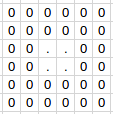
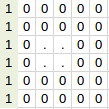
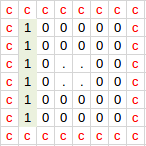
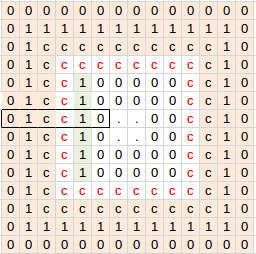
Inspired from what you suggested as the test case Included the following test: 1- Create an empty tensor (image) with zeros 2- Change leftmost column to one. 3- Pad image with a constant value with a length of 1 4- Pad image with edge, symmetric or reflect (3 different cases, below only illustrated symmetric version) Check the values of leftmost middle crop with the length of six (highlighted in the box above), if it is indeed symmetric. Then check the shape of the matrix if it adds up to what we are expecting (Here, I also test if the padding is a tuple instead of a single value in different versions of padding). |
fmassa
left a comment
fmassa
left a comment
There was a problem hiding this comment.
This is awesome, thanks a lot for the contribution!


| # First 6 elements of leftmost edge in the middle of the image, values are in order: | ||
| # edge_pad, edge_pad, edge_pad, constant_pad, constant value added to leftmost edge, 0 | ||
| edge_middle_slice = np.asarray(edge_padded_img).transpose(2, 0, 1)[0][17][:6] | ||
| assert np.all(edge_middle_slice == np.asarray([200, 200, 200, 200, 255, 0])) |
This comment was marked as off-topic.
This comment was marked as off-topic.
Sorry, something went wrong.
This comment was marked as off-topic.
This comment was marked as off-topic.
Sorry, something went wrong.

* [RNN-T] bucketing sampler fix

drop random samples, instead of replacing them with longes sequences

* remove samples without repetitions
3 participants


Added reflect, symmetric and edge padding options.
This option was requested by #400. PR #213 was sent to include the same functionality but still awaiting response from the author since Sep 20, 2017.
The new padding options also work the same way with how it is for the constant one.
If
paddingis an int: it pads all sides.if
paddingis a tuple with two elements: it pads left/right and top/bottom respectively.if
paddingis a tuple with four elements: it pads left, top, right, bottom borders respectively.It also does not break or change the behavior of existing code.
In #213 @alykhantejani suggested that the function should be
pad(img, padding, padding_mode='constant', fill=0)instead ofpad(img, padding, fill=0, padding_mode='constant')because when thepadding_modeis not constant, fill is irrelevant/not used. This is correct, but doing so might break existing code for some people so I did not change the positions.Below are some tests:

RGB test image:
pad(img, 20, padding_mode = 'reflect')pad(img, (0, 50), padding_mode = 'edge')pad(img, (1, 10, 20, 30), padding_mode = 'symmetric')Grayscale test image:

pad(img, (5,10,20,50), padding_mode = 'symmetric')