How the 80/20 rule implemented using Python can optimise your layout, reduce space utilisation, and improve the picking productivity
An Italian economist named Vilfredo Pareto developed 1906 a mathematical formula to describe the distribution of wealth in Italy. He discovered that 80% of the wealth belonged to 20% of the population.

A few decades later, this rule has been generalised to many other applications, including Supply Chain and Logistics Management. This principle, called the “Pareto Principle”, “the 80–20 rule” or “The Law of Trivial Many and Critical Few”, can be translated for Logistics Practitioners
- 80% of your company's revenue is made from 20% of your reference
- 80% of your volume is picked in 20% of your picking locations
- 80% of your replenishment volume will be performed on 20% of your picking locations
Find in the link below a short animated video to explain the concept behind this solution

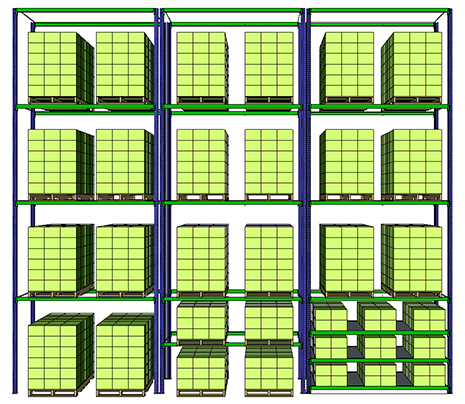
In this Article, we will explore how to apply the Pareto Principle to optimise the layout of a Warehouse
- 1 month of picking orders
- 144,339 order lines
- 59,372 orders
- 4,864 active references

In this repository, you will find all the code used to explain the concepts tackled in the article with a dataset of orders.
Pareto Analysis.ipynb- Jupyter notebook with step-by-step analysispareto_analysis.py- Standalone Python scriptdata/- Folder containing input data (1-2017.csv)
pip install -r requirements.txt
python pareto_analysis.py- pandas
- matplotlib
- openpyxl
Senior Supply Chain and Data Science consultant with international experience working on Logistics and Transportation operations.
For consulting or advising on analytics and sustainable supply chain transformation, feel free to contact me via Logigreen Consulting
Please have a look at my personal blog: Personal Website