Methods for steering, fine-tuning, and aligning models after pretraining. These are the techniques that turn a base model into something useful.
Measured on Apple M-series, Python 3.12. Times are wall-clock.
| Script | Algorithm | Time | Status | Video |
|---|---|---|---|---|
microbatchnorm.py |
Batch Normalization — internal covariate shift and running statistics | 0m 34s | Pass | 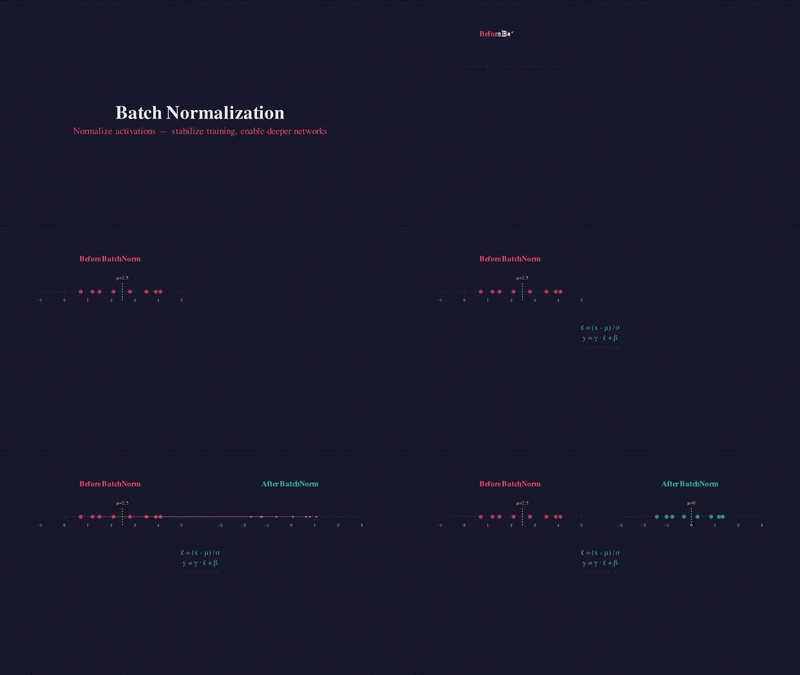 |
microdpo.py |
Direct Preference Optimization | 2m 42s | Pass | 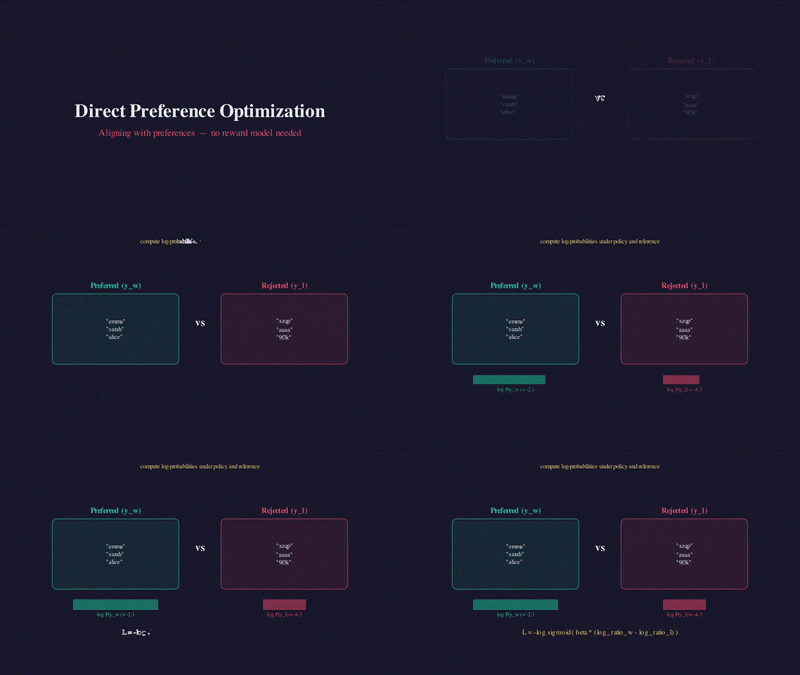 |
microdropout.py |
Dropout, weight decay, and early stopping as regularization | 3m 21s | Pass | 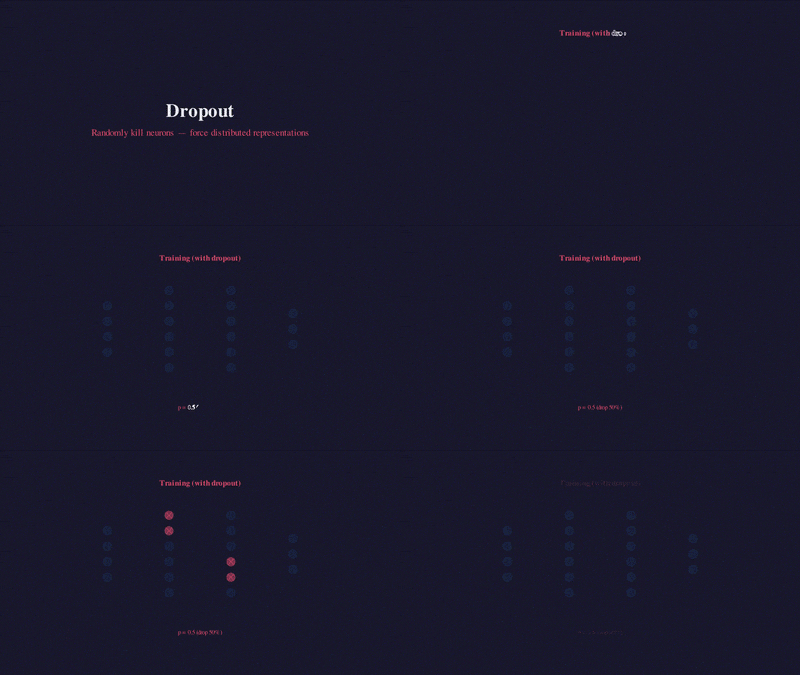 |
microgrpo.py |
Group Relative Policy Optimization (DeepSeek's RLHF simplification) | 0m 23s | Pass | 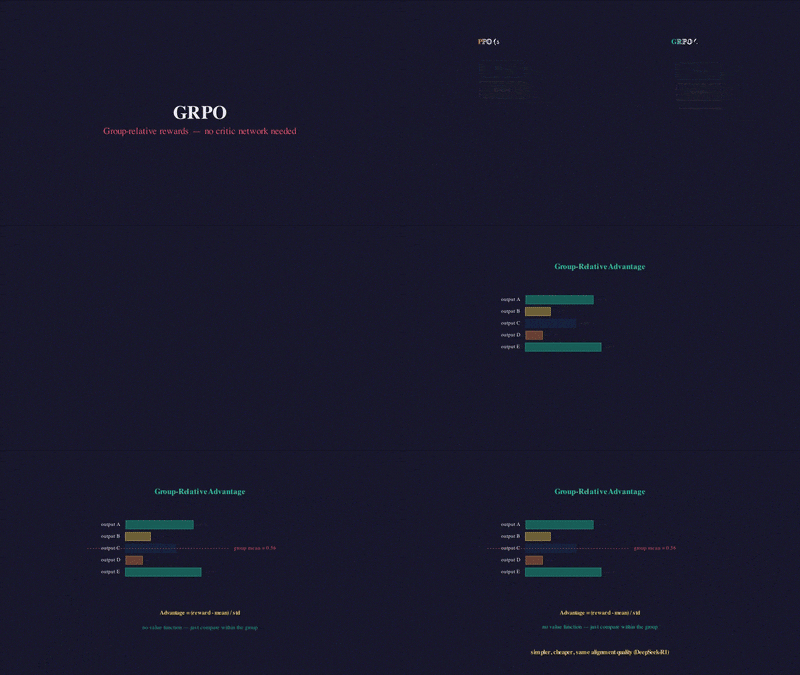 |
microlora.py |
Low-Rank Adaptation (LoRA) fine-tuning | 2m 32s | Pass | 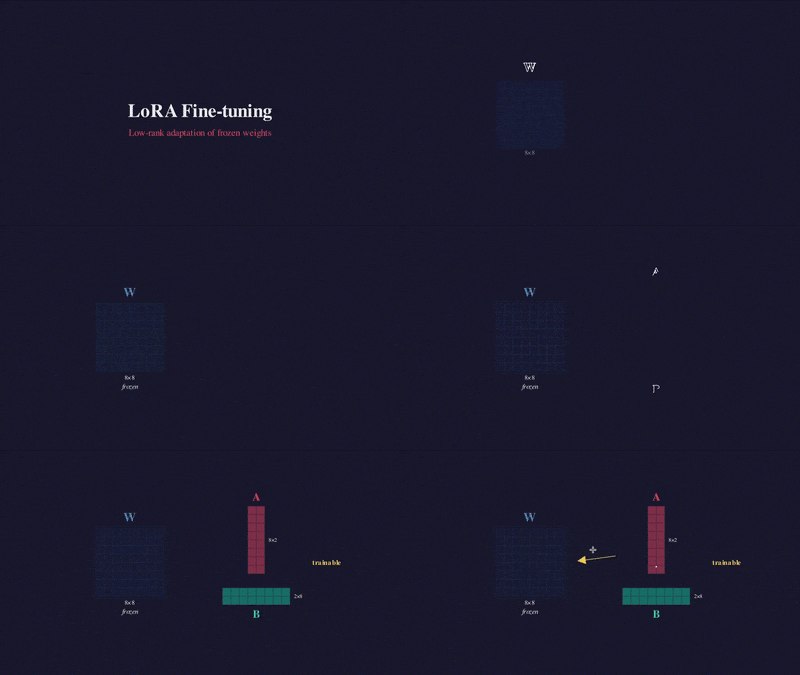 |
micromoe.py |
Mixture of Experts with sparse routing (hybrid autograd) | 0m 06s | Pass |  |
microppo.py |
Proximal Policy Optimization for RLHF (hybrid autograd) | 0m 34s | Pass | 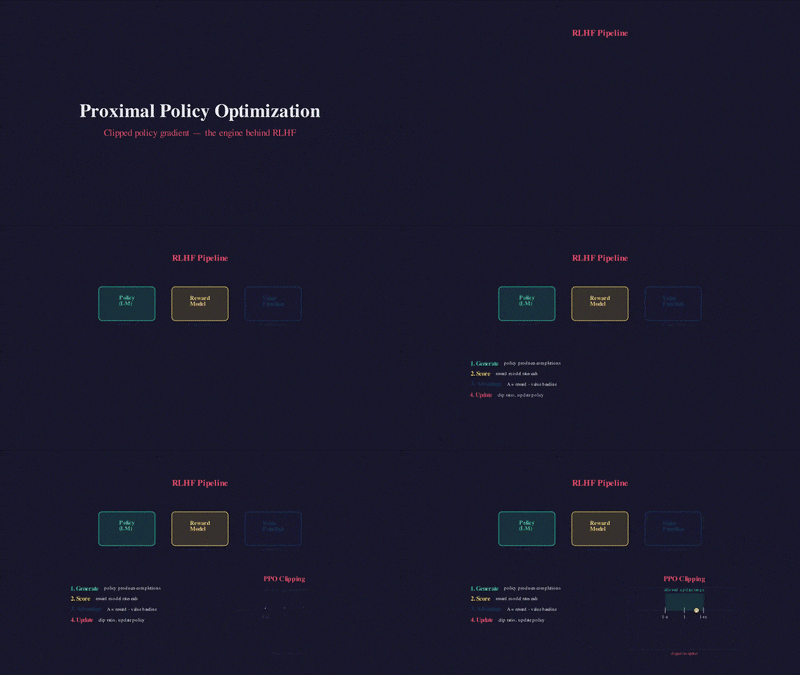 |
microqlora.py |
QLoRA — fine-tuning 4-bit quantized models with LoRA adapters | 2m 27s | Pass |  |
microreinforce.py |
REINFORCE — vanilla policy gradient with baseline | 5m 39s | Pass | 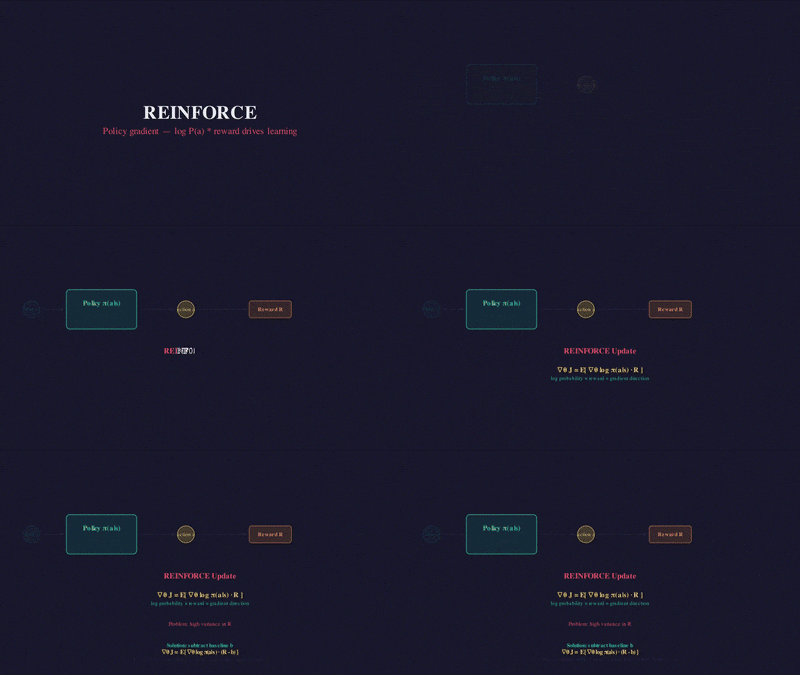 |
microppo.py and micromoe.py use a hybrid autograd approach to meet runtime constraints:
- microppo: Policy model uses scalar autograd (
Valueclass). Reward model and value function use plain float arrays with manual gradients — they're trained separately before the PPO loop. - micromoe: Router uses scalar autograd. Expert MLPs use plain float arrays — the routing decision is the novel mechanism, not the expert forward pass.
See docs/autograd-interface.md for the canonical interface and docs/implementation.md for per-script details.
| Algorithm | What It Would Teach | Notes |
|---|---|---|
| Learning Rate Scheduling | Warmup, cosine decay, step decay | How schedule choice affects convergence |
| Knowledge Distillation | Training small models to mimic large ones | Compression via soft targets |
These scripts build on the foundations tier. Recommended order:
microbatchnorm.py   → How normalizing activations stabilizes training
microdropout.py     → How regularization prevents overfitting
microlora.py        → How fine-tuning works efficiently (1% of parameters)
microqlora.py       → How quantization combines with LoRA for memory efficiency
microreinforce.py   → How policy gradients turn rewards into learning signals
microdpo.py         → How preference alignment works (without reward model)
microppo.py         → How RLHF works (the full reward → policy loop)
microgrpo.py        → How DeepSeek simplified RLHF with group-relative rewards
micromoe.py         → How sparse routing scales model capacity