Memento 模式也叫备忘录模式,是行为模式之一,它的作用是保存对象的内部状态,并在需要的时候(undo/rollback)恢复对象以前的状态。
如果一个对象需要保存状态并可通过 undo 或 rollback 等操作恢复到以前的状态时,可以使用 Memento 模式。
- 一个类需要保存它的对象的状态(相当于 Originator 角色)。
- 设计一个类,该类只是用来保存上述对象的状态(相当于 Memento 角色)。
- 需要的时候,Caretaker 角色要求 Originator 返回一个 Memento 并加以保存。
- undo 或 rollback 操作时,通过 Caretaker 保存的 Memento 恢复 Originator 对象的状态。
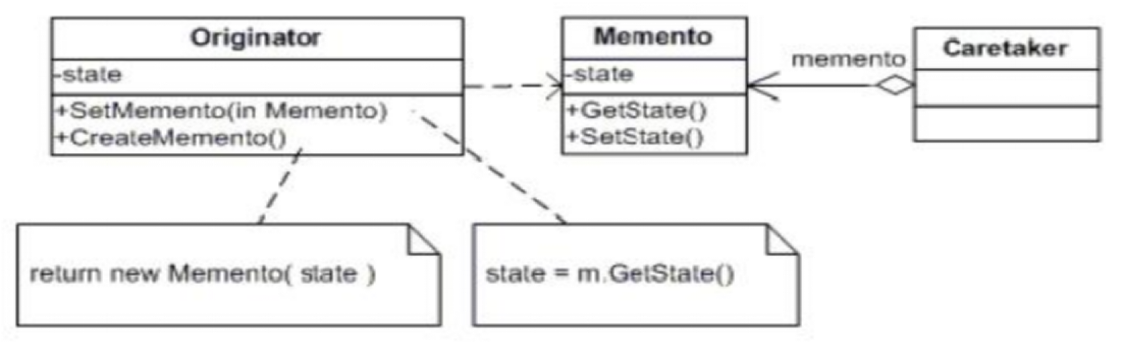
- Originator(原生者):需要被保存状态以便恢复的那个对象
- Memento(备忘录):该对象由 Originator 创建,主要用来保存 Originator 的内部状态。
- Caretaker(管理者):负责在适当的时间保存恢复 Originator 对象的状态
public class Person {
    private String name;
    private String sex;
    private int age;
    public Person() {
    }
    public Person(String name, String sex, int age) {
        this.name = name;
        this.sex = sex;
        this.age = age;
    }
    public String getName() {
        return name;
    }
    public void setName(String name) {
        this.name = name;
    }
    public String getSex() {
        return sex;
    }
    public void setSex(String sex) {
        this.sex = sex;
    }
    public int getAge() {
        return age;
    }
    public void setAge(int age) {
        this.age = age;
    }
    @Override
    public String toString() {
        return "Person{" +
                "name='" + name + '\'' +
                ", sex='" + sex + '\'' +
                ", age=" + age +
                '}';
    }
}
Person person = new Person("lifengxing", "男", 30);
Person backup = new Person();
backup.setName(person.getName());
backup.setSex(person.getSex());
backup.setAge(person.getAge());
System.out.println(person);
person.setAge(20);
System.out.println(person);
person.setName(backup.getName());
person.setSex(backup.getSex());
person.setAge(backup.getAge());
System.out.println(person);Person{name='lifengxing', sex='男', age=30}
Person{name='lifengxing', sex='男', age=20}
Person{name='lifengxing', sex='男', age=30}public class Person {
// ...
public Memento createMemento() {
return new Memento(name, sex, age);
}
public void setMemento(Memento memento) {
this.setName(memento.getName());
this.setSex(memento.getSex());
this.setAge(memento.getAge());
}
}public class Memento {
private String name;
private String sex;
private int age;
public Memento(String name, String sex, int age) {
this.name = name;
this.sex = sex;
this.age = age;
}
public String getName() {
return name;
}
public void setName(String name) {
this.name = name;
}
public String getSex() {
return sex;
}
public void setSex(String sex) {
this.sex = sex;
}
public int getAge() {
return age;
}
public void setAge(int age) {
this.age = age;
}
}public class Caretaker {
private Memento memento;
public Memento getMemento() {
return memento;
}
public void setMemento(Memento memento) {
this.memento = memento;
}
}Person person = new Person("lifengxing", "男", 30);
Memento memento = person.createMemento();
System.out.println(person);
person.setAge(20);
System.out.println(person);
person.setMemento(memento);
System.out.println(person);Person person = new Person("lifengxing", "男", 30);
Caretaker caretaker = new Caretaker();
caretaker.setMemento(person.createMemento());
System.out.println(person);
person.setAge(20);
System.out.println(person);
person.setMemento(caretaker.getMemento());
System.out.println(person);